Research Team
- Principal Investigator: Nguyen Khanh Trung
- Members: Le Minh Hieu & Nguyen Hien
Project Status
Research Abstract
Some scholars argue that Vietnam’s education system is “losing its way” in comparison with global trends. This metaphor reflects an alarming reality. As the Spanish Stoic philosopher Seneca noted more than two thousand years ago in La vie heureuse: “When one is off course, the further one advances, the further one moves away from the destination.” To what extent does this observation apply to the current state of Vietnamese education?
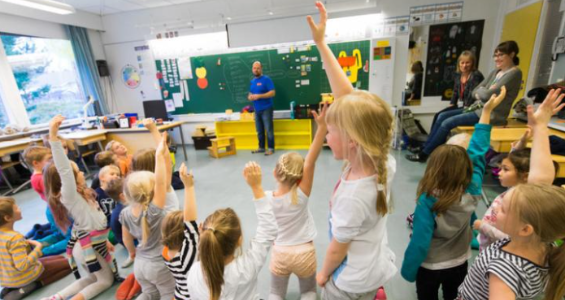
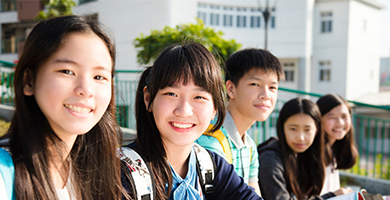
To address this question, our study examines, analyzes, and compares the roles of five key stakeholders—namely the State, school principals, teachers, students, and parents—as well as the patterns of interaction among them. The analysis is conducted across several dimensions, including educational objectives, institutional structures, curriculum design, pedagogical practices, and systems of assessment and evaluation at the primary education level in both Vietnam and Finland.
Empirical data were collected through fieldwork conducted at two schools in the respective countries, involving document analysis, in-depth interviews, and direct observation of school activities over an extended period.
The findings suggest that a “high-quality” education system is one in which stakeholders do not dominate one another but instead coordinate harmoniously within a framework of democratic negotiation, placing the learner at the center of both administrative and pedagogical processes, and maintaining coherence with the broader political, economic, and social environment. Finland’s general education system has achieved more favorable outcomes than its Vietnamese counterpart largely because it aligns more closely with this model.
In contrast, the Vietnamese education system appears to exhibit symptoms of dysfunction, whereby stakeholders do not fulfill their appropriate roles and instead overlap and conflict excessively. The State plays an overarching and directive role across both macro and micro levels, thereby overshadowing the functions of school leaders, teachers, students, and parents. This imbalance constrains the contributions of these stakeholders and prevents the education system from developing in a harmonious and sustainable manner.
Publications:
Nguyen, K. T. (15/4/2013). Xem người Phần Lan làm sách giáo khoa [Exploring how textbooks are developed in Finland]. Retrieved from Tuổi trẻ: http://tuoitre.vn/tin/tuoi-tre-cuoi-tuan/van-de-su-kien/20130415/xem-nguoi-phan-lan-lam-sach-giao-khoa/542793.html
Nguyen, T. K. (04/6/2013). Làm khác đi, bắt đầu từ mục đích [Doing differently from set goals of education]. Retrieved from Tuổi trẻ: http://tuoitre.vn/tin/tuoi-tre-cuoi-tuan/cuoc-song-muon-mau/20130604/lam-khac-di-bat-dau-tu-muc-dich-day-su/551576.html
Nguyen, T. K. (05/10/2012). Dạy kèm ở Phần Lan [Tutoring in Finland]. 19, 33-34.
Nguyen, T. K. (2013). Thân phận người thầy [Roles of teachers]. Tia Sang, 9.
Nguyen, T. K. (2015). Giáo dục Việt Nam - Phần Lan: Một nghiên cứu so sánh điển hình về vai trò các chủ thể tại hai trường tiểu học công lập của hai nước [Education of Vietnam and Finland - a comparative study on roles of actors at two public schools in the two countries]. HCMC: DT Books & Nxb Khoa học xã hội.
Nguyen, T. K. (24/2/2014). Từ tư tưởng giáo dục của Rousseau, nghĩ về giáo dục VN [From educational philosophy of Rousseau, thinking of education of Vietnam]. Tia Sang, 11, 36-37.
Nguyen, T. K. (27/9/2013). Vài suy nghĩ nhân đọc Báo cáo tóm tắt Đề án “Đổi mới căn bản, toàn diện giáo dục [Some comments on drafted masterplan of basic and comprehensive educational reform of Vietnam] Retrieved from Học Thế Nào: https://hocthenao.vn/2013/09/27/vai-suy-nghi-nhan-doc-bao-cao-tom-tat-de-an-doi-moi-can-ban-toan-dien-giao-duc-nguyen-khanh-trung/
Nguyen, T. K. (Septembre 2013). Droit de paille et responsabilité de pierre. Cahier Pedagogique, 507.